
For young people navigating the youth justice system, traditional classroom environments and formal therapeutic supports can often feel daunting or confrontational. Many have long disengaged from mainstream education, making it difficult to find spaces where they feel comfortable opening up or exploring new skills.
At Kurlana Tapa Youth Justice Centre in South Australia, music is helping bridge that gap.
ACMF’s connection to South Australia’s youth justice sector runs deep, spanning back to 2008. After a pause in 2017, we were thrilled to restart our program presence at Kurlana Tapa in March this year. This vital return was made possible through grant funding from the Sony Foundation, whose ongoing vision and commitment to youth at risk has brought structured music tuition back to young residents in South Australia.
Beyond the Classroom: A Non-Judgmental Space
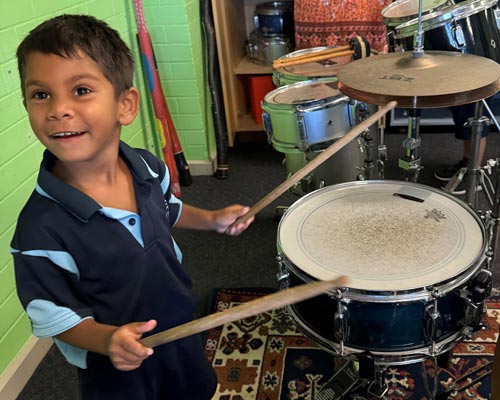
While Kurlana Tapa provides separate music therapy services; the ACMF program focuses on instrument tuition, group playing, and songwriting. Led by music instructor Zac Eichner (who also brings professional expertise as a Registered Music Therapist). The weekly sessions give residents a hands-on, non-confrontational outlet for self-expression.
“Generally, in a youth justice environment, there can be underlying feelings of angst, tension, anger, and low motivation to participate,” explains Zac. “However, once the young people have an opportunity to engage with music in a safe and non-judgmental space, they often leave reflecting positively and looking forward to future sessions.”
Over recent months, the dynamic within the group has evolved into one of mutual support and peer mentorship. “Engagement varies between participants, but lately it’s been amazing seeing long-term group members welcome new members and support their learning directly,” Zac notes. “Taking a backseat and watching participants teach one another guitar chords and techniques is incredible.”
A Breakthrough Moment
The restorative power of music often reveals itself during times of heightened stress. In one recent session, a participant returned from a court appearance after receiving disappointing news. Distressed and overwhelmed, he initially sat entirely removed from the group, refusing to touch an instrument.
Rather than forcing participation, Zac used gentle music listening, lyrical analysis, and improvisation to engage the group. Slowly, the atmosphere shifted. Over the course of the session, the young man began to participate, using the music to regulate his mood and process his disappointment safely. Following the session, he reflected that the music space was one of the only places in his week where he felt truly understood and seen.
Building Protective Factors for the Future
By giving young people a creative tool to process vulnerability and build self-worth, the ACMF program equips residents with protective factors that extend far beyond their time in custody.
“A significant portion of participants in youth justice are highly apprehensive to engage with traditional supports,” says Zac. “Music naturally fosters a supportive environment for expression and healing. Creating a space where young people can develop protective factors, reflect, and share vulnerability is so important.”
Developing pro-social behaviors such as peer collaboration, active listening, and emotional self-regulation helps young people rebuild confidence and imagine entirely new pathways for their lives beyond the justice system. Through the continued backing of the Sony Foundation and our community of supporters, ACMF remains committed to ensuring young people in custody have access to the healing and transformative power of music.
To learn more about how ACMF supports young people in justice settings across Australia, visit our Youth Justice Programs page.